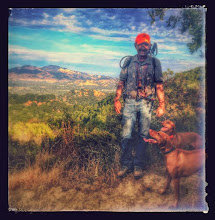
Field trials are a great adventure to accompany your well-bred Vizsla. An adventure complete with the great outdoors, good company, friendly competition, and watching our dogs do what they do best: HUNT.
Now that I am hooked, I want others to experience the joy of following their dog in competition. But that isn't the best part of it. The best part is the daily training and honing of both your and your dog's skills.
Just finished the audio book, "A Dog's Purpose." These amazing animals that we have brought into our lives deserve a "purpose." Doing field trials is just one of the many ways we can change from being pet owners to owners of dogs with a purpose.
Here is a slightly modified article by Ms. Greenlee and Mr. Webb about attending your first field trial. I have substituted Vizsla as the dog breed.
ATTENDING YOUR FIRST FIELD TRIAL
Martha H. Greenlee and David A. Webb
copyright ©
If you have never been to a field trial, you might consider attending one. Field trials are family events, so plan on bringing your family, your
Vizsla, and spending the day outdoors.
Who knows, you might decide that you want to compete with your dog in the field. Field trialers usually don’t start out field trialing. Some of them begin bird hunting with their dogs before getting hooked on the sport. Others begin by showing their dogs in confirmation or obedience or buying their Vizsla pups as pets. There are many different organizations, including the American Kennel Club and the American Field, that sponsor field events, and the rules vary depending on which organization sponsors the trial.
A field trial is made up of different stakes (individual events). Each stake is defined by a dog’s age and ability. Here is some information about the different types of stakes that may be offered if you plan to attend an AKC walking or horseback field trial.
To compete in a puppy stake, a puppy must be between six and fifteen months old. If a puppy has game contact, the handler may be required to fire a blank gun. Puppies run for at least fifteen minutes, but no more than thirty minutes.
To compete in a derby stake, a derby dog must be between six months to two years old. A derby dog must establish point. If handlers are within gun range, they must fire a blank gun. Derby dogs run for twenty to thirty minutes.
To compete in a gun dog stake, a dog has to be at least six months old, be steady-to-wing-and-shot, and back (honor) if the opportunity presents itself. Gun dogs run at least thirty minutes.
An all-age stake is the same as a gun dog stake, but an all-age dog must show more independence and hunt beyond gun range.
Each stake is made up of braces. A brace is a pair of dogs that run together. The number of braces depends on the number of entries. If twenty dogs are entered in a gun dog stake, there are ten gun dog braces. A running order is determined by a drawing and is printed up before the day of the trial.
When it is time for a specific brace to run, the two handlers take their dogs to the line on leads and break them away (release the dogs). A thirty-minute course can cover two to three miles of ground. The handlers walk or ride behind the dogs and try to keep them on course by singing and using their whistles. Two judges, one for each handler, follow. Two scouts, one for each handler, look for the dogs if they get off course or are ridden past where they are on point. The scouts must stay behind the judges.
The gallery, which is made up of people on foot or horseback, follows and must also stay behind the judges.
At a weekend trial the gallery may have twenty to thirty people in it, while at a national championship, the gallery may be in the hundreds.
Quail or other game birds have been released on the course, and the dogs have to find and point them.
Dogs are judged on their desire to hunt, on the way they cover the ground, and on their manners. The dog that comes closest to the standard for each stake wins. Winning dogs receive points towards their field championships, and winning handlers receive ribbons and trophies.
Field trials are competitive events, but they are also social events for dogs and handlers. Dogs enjoy the friendly atmosphere and interact with other dogs and people on a variety of grounds. Handlers are competitive, but this competitive spirit does not interfere with the sportsmanship and the fellowship that are integral elements of the sport. Since field events are held throughout the year, they are a way of enjoying hunting with your dog year round and sharing the comradery that comes with the sport.
The Wonderful World of Sporting Dogs-WHAT IS A FIELD TRIAL?