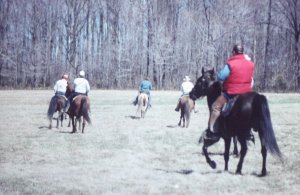
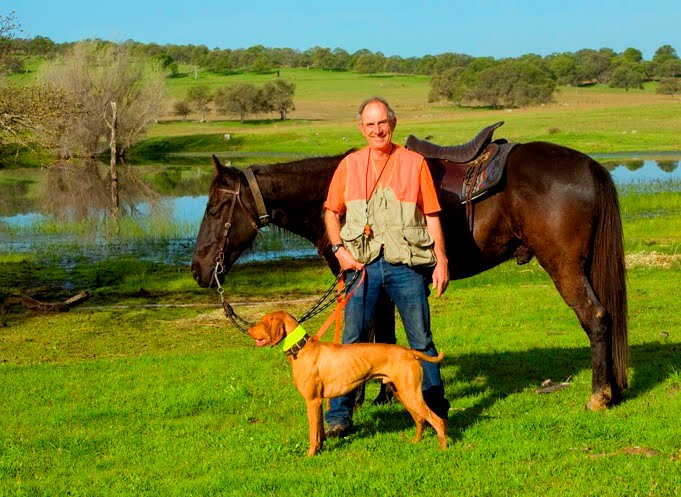
Showing posts with label field trails. Show all posts

Sunday, February 27, 2011

What makes a really good field trial?

For discussion: What makes a good field trial that engages new Vizsla owners and gets them to want to stay involved?

I have asked the above question on the Yahoo Groups: Vizsla Talk and Vizsla FT yesterday.


I am entering my second year of field trialing. Like most people in the sport, I have started helping at our local Vizsla club field trial events.

Over the last two years I have been able to attend maybe 20 field trials all over the West Coast, both walking and horseback, and each is run a little different. These have been all pointing breed events.

In a really tough economy, where everyone is watching every dollar, field trialing is an expense that really needs to be justified.

Even hard-core field trial friends are having to cut back on what trials and how many they can attend.

With fuel going through the roof and all other expenses going up, it is harder to make the commitment to go to trials. Especially if you are new to the sport and not a breeder or professional.

The answers will be organized and posted on my blog Sunday night:

Thanks for any suggestions. I really enjoy the sport but am cutting back on our expenses also."

A couple years ago, at the 2009 National Vizsla Gun Dog Championship, I found the below write-up on the internet.  Great pictures and interesting write ups of how a high-class field trial can be run. 


Tuesday, February 8, 2011

Birth of a Field Trial Man


"I hope the younger generation can get away from their computer games and TV sets long enough to get out and experience field trials with their Vizslas."
 - Rod (started my addiction late)

BIRTH OF A FIELD TRIAL MAN


(article appeared in a 1950's "AMERICAN FIELD" Magazine)
Thanks to Bernie Matthys for his kind regard in permitting this wonderful article to be reported

"How does a man get to be a field trial “addict”? Is he born that way or is it something that develops later in life?

At a local one-hour course trial last fall, I saw the birth of a field trial man. It is something I will never forget.

 
This was a family trial, that is, the entrants brought their families with them and made it a regular get-together. Lunch baskets were much in evidence and the youngsters played with an old football between braces, all but one youngster.

This boy, thirteen or fourteen years old, had a young dog entered in the puppy stakes and was acting very much the way he thought an owner should act. No nonsense with a football for him.


The boy’s father acted as his handler and all during the running of the stake you could see that the youngster was on pins and needles. He kept a wary eye on the performances turned in by the other entries and almost burst with excitement when his own brace was called.


At the finish of the running, the boy’s dog was awarded second place. The winners and other members of the club gathered around the secretary to receive the ribbons and small checks, which went to the successful entries. The boy joined the group and stepped forward very seriously when his name was called.

He accepted the congratulations of the group gravely and hardly cracked a smile. But, as soon as he could back away, he went running too his family covering five feet at every jump and yelling like an Indian every time he hit the ground.

Later, as I was leaving, I saw the youngster kneeling on the wet ground rubbing his dog with a piece of clean burlap sacking. It seemed as if the two were talking to each other; no doubt planning the next campaign and dreaming of a future full of ribbons, checks and trophies.

And so, though we grieve and rightly so as the old-timers pass on, we can count on the youngsters to perpetuate field trials and the breeding of high-class bird dogs. Apparently, in our own breeding of a far higher type the love for a good dog is being passed on as a proponent trait to the coming generation."


The Wonderful World of Sporting Dogs-WHAT IS A FIELD TRIAL?The Wonderful World of Sporting Dogs-WHAT IS A FIELD TRIAL?

Edward Goemaat
Arlington, VA


Monday, January 10, 2011

Getting ‘round in a field trial


Written from the back lounge of the Lazy Daze on Saturday night January 8th.  It's 4 p.m. and the light from the foggy day is starting to fade in the east.

 The temperature has hovered just above freezing all day, but at least the fog was not down in the valleys like it had been over the last couple of days.

Here, at the Sutter Buttes Pointing Club field trial, we have just finished running all the entrants in “open gun dog.”

This group was made up of 28 dogs. The event is run in braces of 2 dogs at a time from horseback and Bailey and I was brace number 14. Last of the day.

 Of the 28 dogs that ran, Bailey was the only dog handled by an amateur.

The rest of the handlers were professional dog men.  Most with an average training history with pointing dogs of 25 years. Some 40+ years.
I will not deal with the details of Bailey’s "run."  I was following him on horseback giving him directions from the saddle.

Field trials can only be explained poorly in writing. It is kind of like explaining rugby or baseball to someone who has never seen either sport.

 A friend call it; "trying to explain the taste of chocolate to someone who has never tasted it."

To sum the contest up.

The trial was 30-minutes long and Bailey did everything correctly. He had honored another dog’s point, had found and held through the flush and shot (blank gun) and had ran well through the oak studded foothills of the Sierras where we were  competing.

So did I win? No.

This is a judged event and you can get around “clean” and not make any actual mistakes, but still not place. There were 27 other dogs. They only give placements to the top four dogs. The rest of us, that made it around clean, just were not in that group of 4.

That is OK. Bailey and I held our own. He did some things very well and is becoming a respected newcomer to the sport.
Comments of “So this is Bailey. I ‘ve heard about him. Good looking dog.” After our run, several words of encouragement from the pros and others in the gallery.


Bailey, at 2 ½, is young. We are running with some of the best dogs in the West and not embarrassing ourselves.

I’m good with that.


After I wrote this, the next morning ,I was told Bailey had made it as the second alternate on the “call back” for the retrieve.  He was not used on the call back when it was all done.

 He had placed 5th out of 28 dogs. I’m very good with that.

The addiction is taking hold.  I was told it might. 

Those who find this boring, I understand.  I would not have cared not that very long ago. 

Now there are few things that I find more exciting than following a couple good pointing dogs as they do what God intended them to do.

Find birds and point them "steady with style."

http://www.steadywithstyle.com/

Wednesday, December 22, 2010

Down time at a field trial

Hurry up and wait is the common pace at a pointing breed field trial.

You learn not to take a "schedule" too seriously EXCEPT if you are called to the line and you are not ready.

At the South Coast Vizsla Field Trial, I had one brace scheduled (ALGD) at 7:30am Saturday morning and next brace (OGD) at 3:30pm.  Our final brace (AGD) was scheduled Sunday at 10:00am.
First brace left right on time at the crack of dawn.  Our second brace got off the line at 4:20pm, just as the sun set, and Sunday's brace didn't start until 12:30.
This is just how the sport is.  Scheduling conflicts with judges or handlers and lost dogs out on the course are the most common problems with a trial moving along smoothly.  You end up expecting a certain number of these.

You learn, after doing this for awhile, to pass the time out away from the rest of the world with good conversation, long walks or a good book.

A good motor home makes down time much easier to handle.

For the holidays, I wanted to make sure each of you had a visual of a meth lab  so you can spot them in your neighborhood.

Visual below


Monday, November 22, 2010

Bailey goes into field trial "rehab"

What Bailey should have looked like on pheasant hunt
Bailey has just spent 10 days in "field trial" rehab with our professional trainer:
Randy Berry.

 When a rookie, like me, goes out and has a grand old time in South Dakota with his dog but forgets to "handle the dog" during the excitement of the hunt, then when you come back to the "real world" - rehab will be in order. 
Bailey went with Randy down to California City and they worked off horseback for a couple days and did some other bird work. 

Over the last four days, I have gone out and worked with Bailey and Randy at Hastings Island.  We have been honing back the skills we will need to compete in next weekend's German Wirehair Pointer field trial out at Kistler Ranch (near Jamestown, California.)


We have Bailey "tuned back up." 

He is still only "green broke" and subject to the mistakes that a young
 28-month-old dog with a rookie handler will make.
taken from horseback at Kistler Ranch
 Will he win in the two gun dog stakes we are entered in? 

On the one hand, the chances of winning are very long.
After a good run at Kistler Ranch last spring
On the other hand,  Bailey should be competitive.
  This is what makes the sport enjoyable - win or lose.

Sunday, October 31, 2010

The South Dakota 5-minute field trial

"We may not see a placement in quite awhile." this one is from April 2010
We went up to Hungry Valley, Nevada to the German Shorthair Pointer Club of Northern Nevada walking field trial this weekend.  We were to run in two 30-minute gun dog contests.  One on Saturday and one on Sunday.

I was told over the last six months that if I took Bailey, who was a green broke dog to South Dakota on a pheasant hunt that I would ruin his field-trial abilities.

"It is like taking a well-tuned track race car and take it off-road joy riding." A good friend of mine told me. 

Well, I now call what happened this weekend, the South Dakota 5-minute field trial.  Bailey ran Saturday afternoon in Limited Amateur Gun Dog and within five minutes had pointed two birds.  But on the first bird he held his hold for about one minute.  I think the chucker choose to leave and Bailey moved in and flushed the bird before I could get to him.
I was about 150 yards away when he went on point.  I had not given him a "whoop" call (code for DON'T MOVE) as I approched (I was within 30 feet when he moved.)  He might have held until I got there if I had.  My mistake.

That was at the four minute mark.  He was out of the contest. 

Before I could collar him, he went on point on a second bird about 100 yards further down the course.  I had to put his leash on and pull him off his point (hated doing this, but was ordered by judges that is what was to be done.  In hindsight, I should have picked him up physically and repositioned him way out of the way through the flush of the bird) while the bracemate, that was honoring Bailey's point, was given the bird found by Bailey.  Two birds in five minutes, but we were done in that contest.

Sunday morning.  We are the first brace out.  Would the South Dakota 5-minute field trial continue?
Off we went just after 8 a.m.  Bailey shot out like a rocket.  He was 300 yards away within a minute and running well.   At four minutes Bailey was out of sight over a small ridge but a chucker flew from the left to right and then we saw Bailey in chase.  The judge hadn't seen Bailey flush the bird so we carried on.  30 seconds later, Bailey now came upon bird number two that he sent into the air and gave chase.  Judge calls out to me "Handler, collar your dog."

So in two days Bailey has found four birds in 10 minutes.  Many dogs had gone birdless (not locating a single bird) in the 30-minute contests.

Bailey running through a South Dakota harvested corn field
I have lost my "broke dog" by taking him hunting in South Dakota.  I would not have changed a thing in what I chose to do.  I can work to steady Bailey again.  I could never replace the great time we had in South Dakota.

 Bailey is one hell of a bird dog.  He has a nose and a drive that impresses even the seasoned pros. 

Now Bailey and I have some work to do.  That's ok.  He is young (28-months-old) intelligent and willing.

South Dakota was an adventure of maybe a lifetime.  It was a "no brainer" that we made the right choice.

Saturday, August 28, 2010

Promoting the Vizsla as a High Class Bird Dog


Bailey has now been gone a little over two months in professional training with Randy Berry. Next weekend Bailey will enter his first Open Gun Dog trial in the Northwest German Shorthair Club trial.  This is the start of Bailey's "campaign" to become a field champion.  Is he among the best?  We'll see.  He'll be running against some of the best.  In two weeks I fly up to Madras, Oregon to attend that weekend's field trial.

Below is a partial write up by one of the most respected people in the Vizsla community.

Ray Cooper -- Co-Founder of the National Vizsla Association

WHY RUN VIZSLAS IN AMERICAN FIELD TRIALS?
Here’s how and why:

1. By competing in trials against breeds that are considered
the best, one gains a perspective on what is needed is his own dogs.

This helps to prevent kennel blindness.
If you see what your dogs need in order to
win, you will be far more selective in your breeding
 program or when selecting a pup.

2. As you select the best of the best from your breed you
 automatically encourage improvement and
discourage complacency.
 If you know either the sire or dam 
 you are considering for breeding stock isn’t capable of
beating the best you are going to look elsewhere.

3. As the product of better breeding begins to perform and
win against the breeds considered to be the best,
 not only does your attitude change,
 but so it does in the minds of those you’re competing against.

4. As these better Vizslas begin to win more often, you attract others
 to your breed who have the same desires as yourself.

5. As you attract more bird dog fanciers they in turn only breed
the best to the best and you begin to see more improvement yet.

6. Over time the breed improvement benefits from this continued momentum.

This can only happen in an arena of purists.

As long as there is a diversion of interest there will be a dilution of quality.

 If you are trying to have a do everything dog,
 you may very well wind up with a do nothing dog.

By running in American Field trials you are competing
 in a world of bird dog purists.

 They don’t give a hoot about which dog won last weekends
best in show. They aren’t interested in hearing that your dog
can catch a Frisbee and jump over a stick.

While they may be polite about it, they are thinking why
 do those people care about that?

If you love the bird dog in your Vizsla, then you owe it to yourself and
your dog to go up against the best.

Find out how you stack up.
You may be surprised, just as many Vizsla owners have been,
when you bring home the blue.

 You may be disappointed at first. One thing you will know is what
you’ve got and what it’s going to take to win.

If you have the desire and the dedication you can have an impact on the trials you
 run in, the people you compete against and the breed you love.

If you would like to learn more about running in
American Field trials, instead of taking someone else’s word for it,
go to their website (http://www.americanfield.com/)
or subscribe to their weekly magazine.

You will see that there are trials all over the country and
 probably some near you on nice grounds.

Go to some, run a dog or two and meet the people. 
You will find a world of people completely dedicated to

bird dogs, their preservation and improvement.
 You may take a little ribbing because you don’t have aPointer or Setter, I sure have.

But that only makes it sweeter when they hand you the trophy.

A good Vizsla can compete against any breed.

A mediocre Vizsla can beat other mediocre Vizslas on any given weekend.

You decide which you would rather have.


Sunday, August 15, 2010

Attending Your First Field Trial


Field trials are a great adventure to accompany your well-bred Vizsla.  An adventure complete with the great outdoors, good company, friendly competition, and watching our dogs do what they do best: HUNT.


Now that I am hooked, I want others to experience the joy of following their dog in competition.  But that isn't the best part of it.  The best part is the daily training and honing of both your and your dog's skills.

Just finished the audio book, "A Dog's Purpose."  These amazing animals that we have brought into our lives deserve a "purpose."  Doing field trials is just one of the many ways we can change from being pet owners to owners of dogs with a purpose.

Here is a slightly modified article by Ms. Greenlee and Mr. Webb about attending your first field trial. I have substituted Vizsla as the dog breed.


ATTENDING YOUR FIRST FIELD TRIAL
Martha H. Greenlee and David A. Webb
copyright ©


If you have never been to a field trial, you might consider attending one. Field trials are family events, so plan on bringing your family, your Vizsla, and spending the day outdoors.

Who knows, you might decide that you want to compete with your dog in the field. Field trialers usually don’t start out field trialing. Some of them begin bird hunting with their dogs before getting hooked on the sport. Others begin by showing their dogs in confirmation or obedience or buying their Vizsla pups as pets. There are many different organizations, including the American Kennel Club and the American Field, that sponsor field events, and the rules vary depending on which organization sponsors the trial.

A field trial is made up of different stakes (individual events). Each stake is defined by a dog’s age and ability. Here is some information about the different types of stakes that may be offered if you plan to attend an AKC walking or horseback field trial.

To compete in a puppy stake, a puppy must be between six and fifteen months old. If a puppy has game contact, the handler may be required to fire a blank gun. Puppies run for at least fifteen minutes, but no more than thirty minutes.

To compete in a derby stake, a derby dog must be between six months to two years old. A derby dog must establish point. If handlers are within gun range, they must fire a blank gun. Derby dogs run for twenty to thirty minutes.

To compete in a gun dog stake, a dog has to be at least six months old, be steady-to-wing-and-shot, and back (honor) if the opportunity presents itself. Gun dogs run at least thirty minutes.

An all-age stake is the same as a gun dog stake, but an all-age dog must show more independence and hunt beyond gun range.

Each stake is made up of braces. A brace is a pair of dogs that run together. The number of braces depends on the number of entries. If twenty dogs are entered in a gun dog stake, there are ten gun dog braces. A running order is determined by a drawing and is printed up before the day of the trial.

When it is time for a specific brace to run, the two handlers take their dogs to the line on leads and break them away (release the dogs). A thirty-minute course can cover two to three miles of ground. The handlers walk or ride behind the dogs and try to keep them on course by singing and using their whistles. Two judges, one for each handler, follow. Two scouts, one for each handler, look for the dogs if they get off course or are ridden past where they are on point. The scouts must stay behind the judges.

 The gallery, which is made up of people on foot or horseback, follows and must also stay behind the judges.
At a weekend trial the gallery may have twenty to thirty people in it, while at a national championship, the gallery may be in the hundreds.

Quail or other game birds have been released on the course, and the dogs have to find and point them.


 Dogs are judged on their desire to hunt, on the way they cover the ground, and on their manners. The dog that comes closest to the standard for each stake wins. Winning dogs receive points towards their field championships, and winning handlers receive ribbons and trophies.

Field trials are competitive events, but they are also social events for dogs and handlers. Dogs enjoy the friendly atmosphere and interact with other dogs and people on a variety of grounds. Handlers are competitive, but this competitive spirit does not interfere with the sportsmanship and the fellowship that are integral elements of the sport. Since field events are held throughout the year, they are a way of enjoying hunting with your dog year round and sharing the comradery that comes with the sport.

The Wonderful World of Sporting Dogs-WHAT IS A FIELD TRIAL?

Monday, July 5, 2010

Why Field Trials?

By Dick Reinhardt DDS - 1980

Bailey forth place derby GSP Reno trial 2009
Bailey was 11 months old.

Vizsla breeders must have a goal.

Let us assume for the moment that this goal for which we are striving is a super gun dog with range ideally suited for the foot hunter; An attractive, driving dog that intelligently reaches out to the objectives, a nose that will allow him to locate accurately without crowding his birds, stamina to withstand a hard day’s hunt, and a biddable dog that is easily handled and trained.


 Immediately the average sportsman-hunter with his good shooting dog will exclaim, “…then why fool around with field trials and breed for these wild-running, All-Age dogs?”


 There are several reasons why field trials are essential in the development and protection of a hunting breed.

The Wonderful World of Sporting Dogs (What Is A Field Trial?) [VHS]
First, it is a sport unto itself, a source of enjoyment to those who participate (both man and dog), and it stimulates interest in bird dogs and bird dog training. But, much more important, field trials provide a means of comparing bird dogs in the field – thus giving proof (or disproof) to our breeding theories and practices.


The high-class, running field trial performer exemplifies desire, ambition and courage. He displays speed and stamina in covering the maximum amount of ground in a given time. He must show a natural intelligence in his ground pattern and his olfactory powers must be of high order or he would be unable to handle his game at this speed. Style and dash go hand in hand with conformation as does the ability to run fast with the least possible exertion.
1892 Kennel Club Field Trials Ipswich Dogs Pretyman

 A dog that is not put together right cannot go the distance and look good doing it!

Field Trial Magazine

True, these so-called “class” dogs are not at all times also ideal for all hunting excursions, but, to quote from W.F. Brown’s book FIELD TRIALS:

“There is a tendency toward average in any long-established breed, and outside of a very few individuals which inherit to a marked degree the intensified qualities of a prepotent sires, the majority of a dog’s get will grade down from high-class performer through all the intermediate grades to that of the rank duffer. The records of prepotent sires reveal the fact that they sired scores of ordinary shooting dogs to one really high-class performer. Consequently, what would be the ratio if we were to breed from individuals of ordinary quality; or, in other words, from such as are common consent considered “ideal shooting dogs” by the rank and file of American Sportsman?"
Bailey's 2nd place at NCVC walking trial (22 dog) open derby 2010 at 23 months old.

The next day Bailey takes first in Amateur Derby

This “Drag of the Race”, or tendency within purebred varieties, when artificial selection is not employed, to revert to the norm of the species, can be simply stated as follows: a dog of field trial caliber will throw possibly one pup like himself in a litter and the rest will be good to excellent hunting dogs. A good to excellent hunting dog may through one or two dogs like himself and the rest fair hunting dogs. A fair hunting dog will produce a few like himself and the rest potterers. This is true of any breed – and this is – Why Field Trials."