Spenceville, California, is a ghost town. Now in the rolling hills east of Marysville, nature lovers and hunters have access to thousands of acres of oak-tree-filled valleys and hills that surround this old copper mining town.

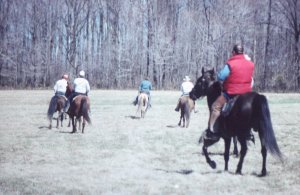
The Spenceville area is used by sporting dog field trialers.

Today at the break of dawn, Chloe and Bailey and our training gear got loaded up in the VW and we drove the 2-1/2-hour trip to the northeast.

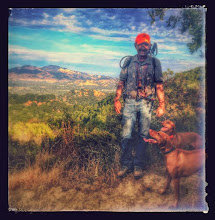
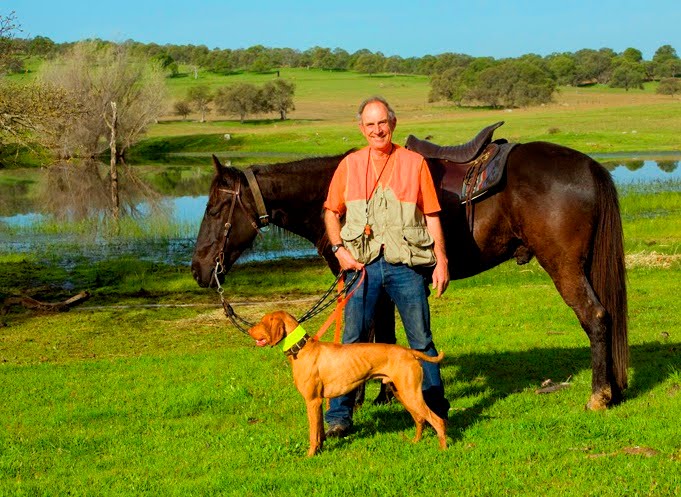
For a little over 2 hours I followed Bailey and Chloe on foot carrying my 20-gauge and blank gun as they ran through the fields that are used for the trials. The training session was good and each time we go out Bailey gets a little better. Bailey wore his training collar but we didn't use it much. He was running very well. Each repetition of an act that is done in the environment where it is expected is how dogs learn.

After the training, we drove the short drive to the washed out bridge that used to go to the town of Spenceville. A small bridge still goes over the small river. We walked about an hour. They had a good time swimming and exploring the area.


A great way to spend a 65-degree unusually nice January day.
HOW TO GET THERE: To get to the Spenceville Wildlife Area from Grass Valley, drive 12.5 miles west from Highway 49 in Grass Valley on Highway 20 toward Marysville. From the Marysville Area drive East on Highway 20. Turn south from Highway 20, at the Beale AF Base sign, onto Smartville Road. After .9 mile, take the left fork and continue on Smartville Road about 3.8 miles to Waldo Road. Continue along Waldo Road for 1.8 miles to the Waldo Bridge, which was built in 1901 to serve the now extinct towns of Waldo and Spenceville. After crossing the bridge, continue to the left along Spenceville Road for 2.3 miles until you arrive at the turnout and trailhead by the old, cement bridge and abandoned mine site.
Description: Spenceville Wildlife Area is comprised of 11,942 acres of blue oak - gray pine woodland characteristic of the Sierra Foothills. The terrain of the area varies from 200' to 1200' elevation. The wildlife area is bordered on the west by Beale Air Force Base and on the north, south, and east by privately owned ranches. There are numerous ponds, creeks, trails and riparian zones in the area.
Recreational Use: Type C Wildlife Area - no permits, passes, or reservations are required except for spring turkey hunt.
Fishing - Fishing best for largemouth bass, bluegill, and catfish in the following waters: Pittman, Horseshoe, Little Dry Creek, Wood Duck #1, Spring Plot, and Upper Jones Ponds. Also Dry Creek, Little Dry Creek, and Cox Creek.
Camping - Camping from Sept. 1 through the end of spring turkey season in the designated camp Area only. Camping is limited to 7 consecutive days or 14 days total during the calendar year.
Dog Training - Allowed from July 1 through March 15 on areas designated by the Department.
Equestrian Trail Riding - Trail riding is limited to designated trails, graveled administrative roads (Pittman, Falls, Nichols, Jones), and within 25 feet of any wildlife area exterior boundary fence. No cross country riding is permitted. Equestrians may access the area at the designated camp area and the access gates on Waldo Road located by the corrals. Equestrian-drawn carriages - Only county roads open to vehicles may be used.
Bicycles - Bicycle use by individuals is restricted to graveled administrative roads (Pittman, Falls, Nichols, Jones) and county roads. The roads listed above are all gated with white pipe gates.
Archery - Target practice at the public archery and/or shooting areas only. Archery equipment may be possessed on the wildlife area during legal archery season starting September 1.
Target Shooting- Target shooting is permitted at the public target shooting area where only paper and clay targets will be allowed and must be removed prior to leaving the shooting area.
Group Use - Permits must be obtained from the department to schedule all group use events.
Hunting: Allowed September 1 - January 31 for all legal species and during spring turkey season. Reservations are required for the first nine days of the spring turkey season.
Bobwhite are considered quail and may be hunted during the local California quail season.
Bobwhite (leftover after dog field trials) - usually found in the open areas.

 Ghost Towns of Northern California